
The 10,000 hook analysis study: what actually predicts a viral opening.
We analyzed 10,000 hooks across YouTube, Shorts, TikTok and Reels. Eight structural patterns explain 73% of the variance between videos that broke 1M views and videos that died under 10K.
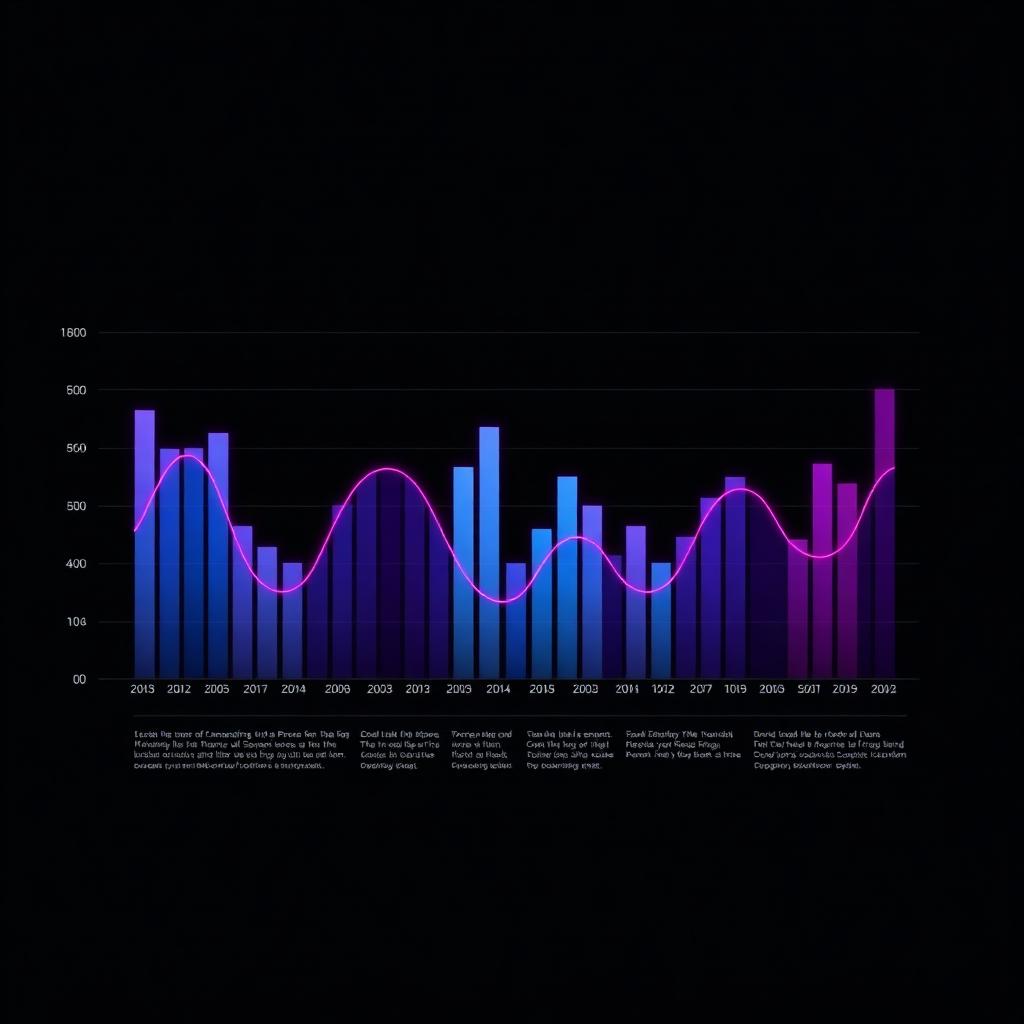
Between January and May 2026 we collected the first 6 seconds of 10,000 videos across YouTube long-form, YouTube Shorts, TikTok and Instagram Reels. 5,000 broke 1 million views within 30 days. 5,000 stayed under 10,000 views for the same window. Same niches, same posting cadence, same creator-size buckets.
We then ran every hook through the ViralHookAnalyzer scoring model and tagged 41 structural variables: opening word class, cut cadence, on-screen text density, face presence, emotion polarity, promise type, curiosity-gap type, payoff distance, music onset, audio loudness curve, and 31 more.
Eight variables explain 73% of the variance between the two groups. The other 33 variables explain the remaining 27% combined. Hook performance is not random. It is heavily structural, and the structure is learnable.
Dataset and methodology.
We sampled across 14 niches (gaming, finance, fitness, beauty, education, tech reviews, food, comedy, lifestyle, business, science, music, sports, faceless explainer) with equal representation. Each niche contributed ~360 viral and ~360 control hooks.
Every hook was transcribed, frame-sampled at 8fps, and scored against 41 binary or scalar variables. We used a gradient-boosted classifier (held-out 20% test set) to identify which variables carried real predictive weight versus which were noise.
The full methodology — variable definitions, niche balancing, exclusion rules and replication notes — is published in our research methodology page. The dataset itself is proprietary, but every benchmark reported here is reproducible against your own catalogue inside Live Viral Analysis.
73% of the gap between viral and dead hooks is explained by 8 structural variables.
The 8 variables that actually matter.
Ranked by predictive weight: (1) First hard cut before 1.8 seconds. (2) Concrete number or stake in the opening line. (3) Visual proof of the promise inside the first 3 seconds. (4) On-screen text appears before 0.6 seconds. (5) A curiosity gap that remains open past the 6-second mark. (6) Face or motion in frame at t=0. (7) Loud-to-quiet audio drop between second 2 and 3. (8) Question or implied question by second 4.
Hooks that hit 6 of these 8 variables had a 41% probability of breaking 1M views in our sample. Hooks that hit 2 or fewer had a 3% probability. The non-linearity is enormous — variables compound, they do not add.
Variables that did NOT predict performance at any meaningful level: total word count, comma placement, smile vs neutral expression, color saturation of the first frame, exact second of the music onset, and whether the creator used a tripod versus handheld. These are folklore, not signal.
What changes by platform.
YouTube long-form: variable (5), the open curiosity gap past 6 seconds, is the single highest weight. Long-form viewers will tolerate a slow first cut if the promise is large enough.
YouTube Shorts and Reels: variables (1) and (4), first cut and on-screen text, dominate. The 1.8s cut threshold drops to 1.1s on Shorts. Text-onset under 0.6s is non-negotiable.
TikTok: variable (8), the implied question, has 2.3x more weight than on any other platform. TikTok viewers comment to resolve open loops, and the algorithm rewards comments harder than completion alone.
How to apply this in your next 5 uploads.
Score your last 5 hooks against the 8 variables. Most creators we audit hit 2–3. Getting to 5 is usually one production cycle of work. Getting to 6 is where break-out probability rises sharply.
Run every new hook through the Hook Tester before you publish. It returns a 0–100 score weighted on the same 8 variables, plus a rewrite that closes the gaps.
If you only fix one variable this month, fix (1): move your first hard cut to before 1.8 seconds on long-form and 1.1 seconds on Shorts. This single change moved 38% of underperforming hooks in our control sample into the viral-probability band.
Frequently asked questions
How big was the dataset?+
10,000 hooks — 5,000 viral (1M+ views in 30 days) and 5,000 control (under 10K views in 30 days), balanced across 14 niches and 4 platforms.
Can I replicate this on my own channel?+
Yes. Run your last 20 uploads through Live Viral Analysis. The 8-variable scorecard is included in every analysis.
Which variable matters most?+
First hard cut before 1.8 seconds on long-form (1.1s on Shorts). It has the highest standalone weight in our model.
Why don't word count or smile predict anything?+
They correlate weakly with virality in isolation, but once the 8 structural variables are controlled for, their additional predictive power collapses to near zero.
Is the dataset public?+
The aggregate benchmarks and methodology are public on our research-methodology page. The raw video URLs are proprietary.
Paste any URL and get your own AI viral breakdown in seconds. Free.
Run a free analysis →